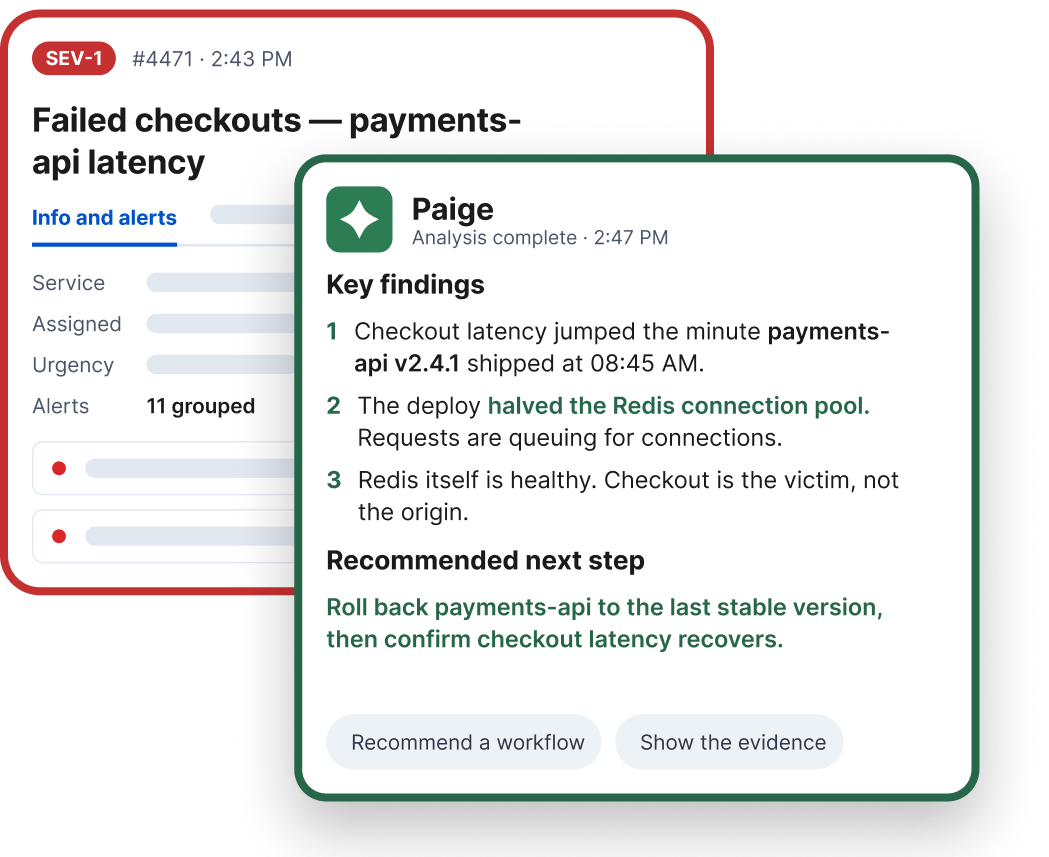
Honeycomb announced early access to Personal and Team Agents on November 3. The agents support reliability work using production telemetry, team knowledge and connected tools. The company describes findings linked to the queries, traces, deployments or tickets behind them, with confirmed results distinguished from hypotheses.
Evidence links are part of the workflow
This creates a way to check an investigation against source evidence. It does not mean a linked finding is necessarily correct: the data can be incomplete, instrumentation can miss a failure and a plausible correlation can still misidentify its cause. Review must examine both the conclusion and the evidence selected.
Permissions define the operating boundary
Personal Agents act on recommendations when instructed. Team Agents can work on goals triggered by schedules or operating events, within permissions assigned by the customer. These boundaries matter when moving from diagnosis to an action that affects a running service.
Test investigation quality
Early access should be evaluated on representative incidents and uneventful deployments. Useful measures include false alarms, time to a supported diagnosis, missed failure modes and the human review needed before action. Those results would establish whether background agents improve reliability work beyond producing more investigations.
Image: Honeycomb / source announcement. Used for source-attributed editorial reporting; rights remain with the owner.
Sources & evidence
Sources describe the announcements and evidence available when this analysis was published. Company claims are attributed; plans and trials are not treated as sustained operation.