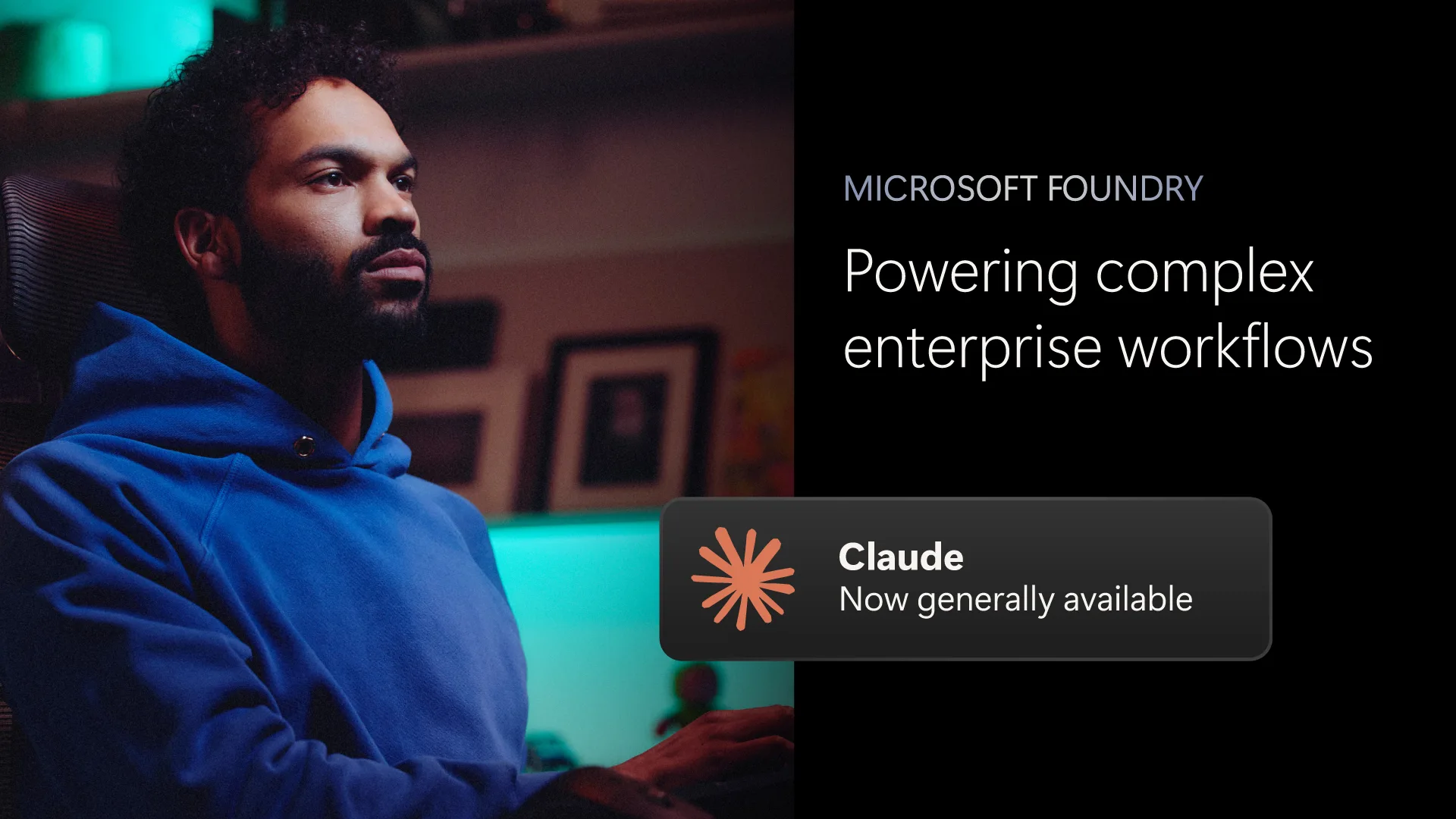
Microsoft’s August 17, 2026 Foundry announcement bundled five Claude capabilities: structured outputs, web search, web fetch, an MCP connector, and tool search. The connector was described as beta, and the tools ran through the Foundry integration rather than requiring every application to manage the same connections itself. For enterprise agents, the important change was the location of the integration work: capabilities previously assembled around a model were becoming features of the platform that served it. Five new Claude capabilities in Microsoft Foundry.
A standard connector can make an agent more useful almost immediately. It can also make the agent's reach harder to understand if every connected capability is treated as equally appropriate. The central autonomy question is therefore not just whether a tool is available. It is whether this agent should use it for this particular request.
Anthropic announced the Model Context Protocol on November 25, 2024, describing an open approach for connecting AI applications to data sources and tools. The announcement's claims about simpler integration are the company's claims. A shared protocol does not itself decide an organization's authorization policy. Anthropic's MCP announcement.
Separate availability from authority
Our view is that each tool should have an explicit purpose, a limited credential, and a clear owner. Reading a customer record and changing it are different privileges. A connector catalog should make that distinction visible to the application and to the people responsible for it. Convenience at the integration layer should not blur the business decision.
A prompt-injection study first submitted February 23, 2023, demonstrated attacks delivered through content retrieved by language-model applications. It highlighted how outside material could influence tool-connected systems. The study provides a reason to keep retrieved content separate from trusted authority. Indirect Prompt Injection study.
Build a narrow contract
We would evaluate a connector using both ordinary tasks and misleading external content. Check that the agent can refuse actions beyond its scope and report what it actually changed. A common protocol is valuable infrastructure. The durable operating advantage comes from combining that infrastructure with permissions and evidence that remain understandable as the number of connected systems grows.
The connection standard acquires an execution strategy
Anthropic’s November 24, 2025 advanced-tool release had already separated three problems: finding tools, calling them through code, and demonstrating correct usage with examples. Its Tool Search Tool deferred loading descriptions until needed, while Programmatic Tool Calling let code handle sequences of operations. The company illustrated the latter with Claude for Excel processing large spreadsheets. The release was a set of beta capabilities at that date; its internal token-saving results describe specific experiments rather than a universal advantage for every integration. Anthropic advanced tool use.
Why a connector does not finish the job
The chronology clarifies an often-confused distinction. MCP standardizes a connection between an agent and a tool provider. It does not decide which tool the agent should use, what information it should expose to that tool, or whether the intended action is permitted. A hosted connector can remove considerable engineering work while leaving those semantic decisions intact. As a result, easier integration can increase the number of reachable systems faster than it increases confidence in how the agent will use them.
This is particularly consequential for enterprise software, where several operations can have similar names but very different effects. Searching a customer record, updating its status, and exporting its history may all be reachable through one integration. The model must distinguish them; the application must preserve the relevant boundaries. A successful connection test only proves that messages can cross the interface.
Code changes what the model needs to see
Anthropic’s November 4, 2025 account of code execution with MCP used a document-transfer example: retrieve a meeting transcript from Google Drive and attach it to a Salesforce record. Instead of passing the full text through the language model twice, generated code could carry the data between calls. The article also described filtering rows before returning a smaller result to the model. This is a concrete architecture for reducing unnecessary exposure and context consumption, not a claim that arbitrary generated code is automatically safe. Anthropic code execution with MCP.
The platform becomes part of the agent
Foundry’s packaging therefore matters beyond convenience. A platform can make a common integration pattern easier to deploy, but it also becomes part of the system being evaluated. Tool schemas, identity handling, response formatting, and failures can all affect the action the model takes next. Two applications using the same underlying model may behave differently because these surrounding services differ.
The practical competitive question is whether managed integrations reduce the total work required to operate an agent reliably. A team may spend less time writing connection code but more time understanding platform defaults, logging paths, or permission interactions. That is not inherently a bad trade; it is a trade that a model-only comparison misses.
The August release also shows why the phrase “access to enterprise tools” is too broad to describe autonomy. Access is a prerequisite. Useful autonomy means selecting the right operation, maintaining the meaning of its parameters, and recognizing what the returned evidence does and does not establish. Microsoft’s announcement advances the infrastructure side of that equation. The reasoning and accountability side remains shared by the model, the application, and the organization that gives the agent its task.
The research behind the release
The February 2023 indirect prompt-injection paper examined attacks delivered through material an application retrieved, including demonstrations involving search and code assistance. Its central operational relevance is that retrieved content can influence a model even when it was not supplied as an instruction by the user. A growing tool ecosystem multiplies the places from which such content can arrive. A standardized connector makes integration more consistent, but consistency of transport does not establish trust in the transported text. The application still needs to distinguish an external source’s claims from the user’s authority to authorize an action. Original research paper.
Sources & evidence
This archive preserves its original editorial date. Sources describe the events and announcements discussed; they do not establish today’s status.