Cursor released Rollouts and Security Reviewer on September 23, 2026. Rollouts connects source control, deployments, and telemetry, preparing a monitoring plan before merge and checking production signals afterward. Configurable responses include a notification, a paused rollout, or a proposed revert. Direct feature-flag control remained future work. This extends the agent’s job beyond producing a pull request. Cursor releases Rollouts and Security Reviewer.
A coding agent can produce a plausible patch quickly. The business value arrives only when the software behaves correctly and the change fits the surrounding system. That makes autonomous coding an evaluation problem as much as a generation problem. The reviewer needs evidence about behavior, scope, and the failure the patch is meant to resolve.
SWE-bench, first submitted October 10, 2023, introduced tasks based on real GitHub issues and associated repository changes. It asked models to edit an existing codebase rather than simply complete isolated code snippets. The original results are historical and should not be mistaken for current model rankings. SWE-bench paper.
Check the actual contract
In our analysis, a useful coding workflow begins by reproducing the reported problem or identifying its observable condition. The agent should then make the smallest coherent change and run checks that distinguish success from a superficially plausible fix. Passing an unrelated test suite is helpful context, but it may not verify the requested behavior.
WebArena's July 25, 2023, paper similarly emphasized functional task completion in interactive websites. Although its setting differs from software repair, it reinforces a transferable evaluation principle: the resulting environment matters more than the elegance of the agent's narrative. WebArena paper.
Make review economical
We would require a concise account of what changed, why it addresses the issue, and which evidence supports that claim. Broader permissions should follow demonstrated reliability on the team's own repository. This preserves the benefit of autonomous implementation while keeping the human decision grounded in something inspectable: a concrete change, a meaningful check, and a clear statement of remaining uncertainty.
The September sequence
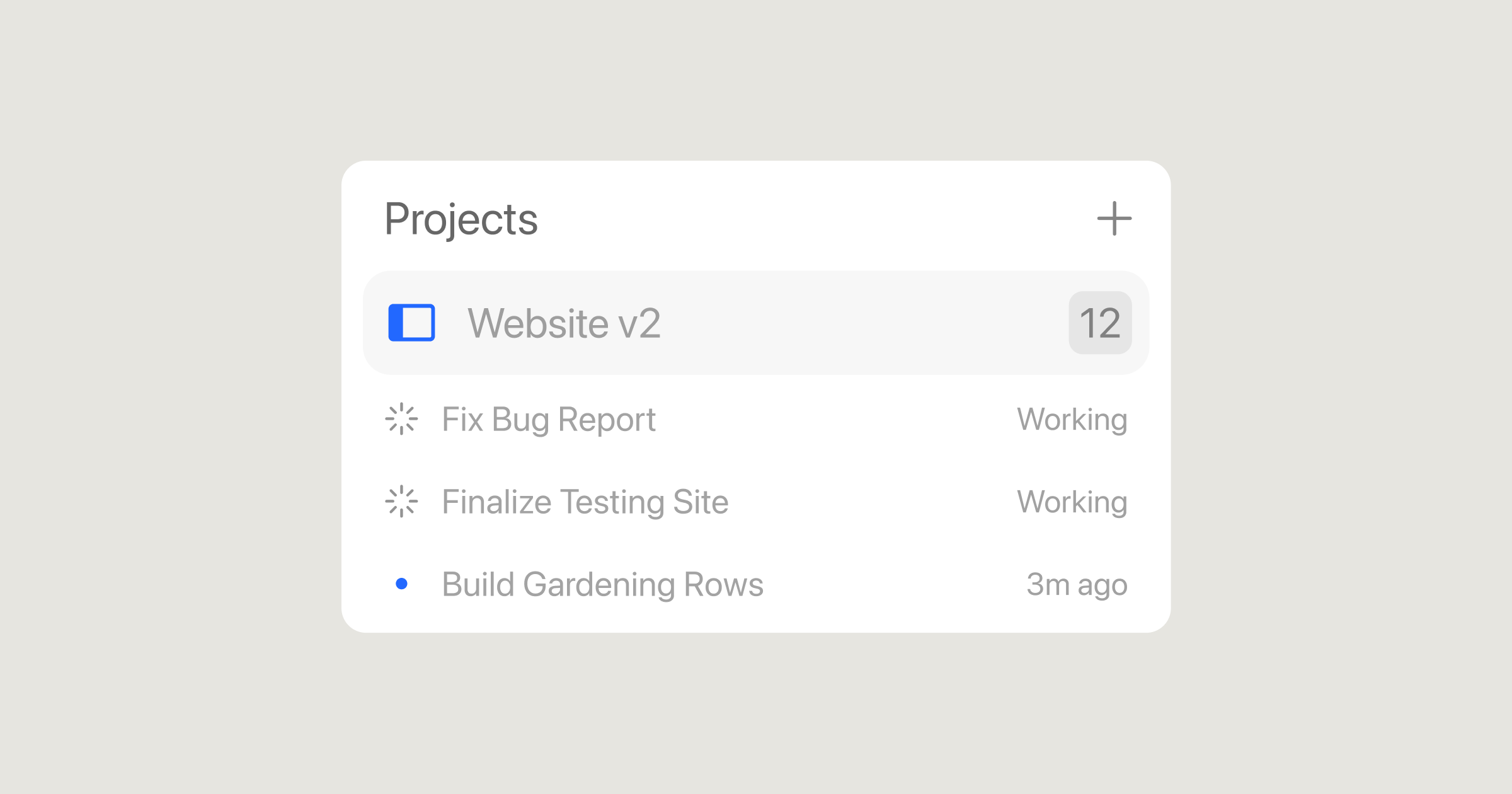
Two weeks earlier, on September 10, Cursor introduced Projects, which the company described as persistent shared context across local and cloud work. Its pitch included delegating tasks across many subagents and retaining project understanding over long periods. The company’s reported internal uses included migrations spanning hundreds of pull requests. That is evidence of the workflow Cursor is targeting; it is not a controlled comparison showing the same results in every customer’s repository. Cursor introduces Projects.
A different definition of a completed change
The two launches belong together. A project coordinator can divide a migration into edits, but successful edits do not establish that the deployed service behaves correctly. The new monitoring product addresses the interval between code acceptance and confidence in the resulting system. That interval contains different evidence: error rates, latency, traces, and the intended effect of the change. The agent must connect these observations to the particular revision under examination.
Consider a change intended to add a cache. More cache hits may be expected; an increase in stale responses may be a regression. Both can appear after the same deployment. A useful agent needs to preserve the purpose of the change rather than treating every movement in a graph as bad. That makes the pre-merge monitoring plan more than a summary. It is the connection between the engineering intention and the operational test.
Security review is a separate claim
Security Reviewer, also released for Teams and Enterprise, was described as reading a pull request in the context of its codebase and proposing fixes for findings such as broken authorization, injection paths, exposed secrets, and unsafe configuration. Cursor’s announcement gives a product capability list, not an independent guarantee of vulnerability coverage. The distinction matters because a clean review can mean either that the change is sound or that the reviewer missed the relevant execution path. Cursor releases Rollouts and Security Reviewer.
The autonomy boundary moves into operations
These products change who, or what, notices that a change has failed. Traditionally a human might connect an alert with a recent deployment and decide whether the evidence is sufficient to revert. An agent can shorten that chain, especially when a localized problem never crosses a global alert threshold. But faster association is only useful if it does not turn coincidence into causation. Several changes can arrive together; workloads and upstream services can move independently.
That is why the distinction between proposing a revert and executing one is material to the product story. A proposal packages evidence for a decision. An automatic action assumes responsibility for the decision’s immediate consequences. The September announcement describes configurable responses, leaving different organizations at different points on that spectrum.
The larger implication is that coding-agent competition is expanding from the quality of a generated patch to the continuity of the entire change. A product that remembers why a patch was made, checks how it behaved, and preserves a route back can be more useful than one that merely writes more patches. Cursor has made that ambition concrete with released features. Whether it consistently attributes regressions correctly remains a separate empirical question, one that a public launch cannot settle.
The research behind the release
The original SWE-bench paper, published in October 2023, assembled 2,294 issues from 12 Python repositories and evaluated generated patches against tests. Its task was repository repair, not live deployment monitoring. That difference explains why a strong result on a coding benchmark cannot alone establish the effectiveness of Rollouts. The later product must associate runtime observations with changes in a system where other events are occurring. A patch benchmark gives an agent a relatively bounded problem; operations add timing, incomplete instrumentation, and competing explanations. Both are software work, but the evidence required to call each one complete is different. Original research paper.
Sources & evidence
This archive preserves its original editorial date. Sources describe the events and announcements discussed; they do not establish today’s status.